WuXi Biologics
Offering End-to-End Solutions

Research Chemistry
Services
Light and Flow: How WuXi AppTec Bridges the Gap in Novel Drug Chemical Synthesis
Light and Flow: How WuXi AppTec Bridges the Gap in Novel Drug Chemical Synthesis
In the journey of new drug development, success or failure often hinges on the efficient synthesis of a single, critical chemical intermediate—far more than on grand narratives. Among WuXi AppTec’s many customers, numerous significant collaborations begin at what may seem like a minor but is in fact a pivotal point in the chemical process.
The story starts with a challenging molecular scaffold.
A company was advancing a highly promising molecule when it hit a critical roadblock. The project urgently required the construction of a complex and precise three-dimensional molecular scaffold. This scaffold was the “heart” of the drug molecule; its shape and spatial structure had to be flawless. Therefore, successfully constructing this core scaffold with correct stereo configuration was the only way to build a biologically active complex molecule, ultimately advancing it toward clinical trials and the potential to save lives.
However, the team faced a bottleneck inherent to traditional batch processing.
In traditional batch processing, all raw materials are sequentially added to a reaction vessel, stirred, and reacted under set temperature and pressure conditions. Once the reaction is complete, the product is isolated and purified. For this project, the conventional synthetic route would have required five reaction steps, resulting in low efficiency. Moreover, only about half of the final product possessed the required stereo configuration, and the overall yield was low.
An even greater challenge was the significant gap between gram-scale laboratory exploration and kilogram-scale production using traditional batch methods. This scaling-up process is not a simple matter of multiplying the recipe by a factor of 1000. When a process is scaled up, the physical environment of the reaction system changes. Many reactions that work smoothly in a flask may face decreased efficiency or even fail when transferred to a large reactor. Overcoming these challenges would require substantial additional time and resources to re-optimize the process conditions.
Faced with this challenge, the company immediately contacted WuXi AppTec’s Research Chemistry Services (RCS) team. This trust was not built overnight. It has been accumulated over more than a decade through multiple collaborative projects, earned through consistent delivery of professional and efficient services.
Upon receiving the task, the RCS team quickly pulled together experts from multiple sites—kicking off a race against time to tackle the technical challenge.
How could they solve the intertwined problems of low yield, poor cis-trans selectivity, and the difficulty of scaling up the batch process? The team’s focus turned to photochemistry.
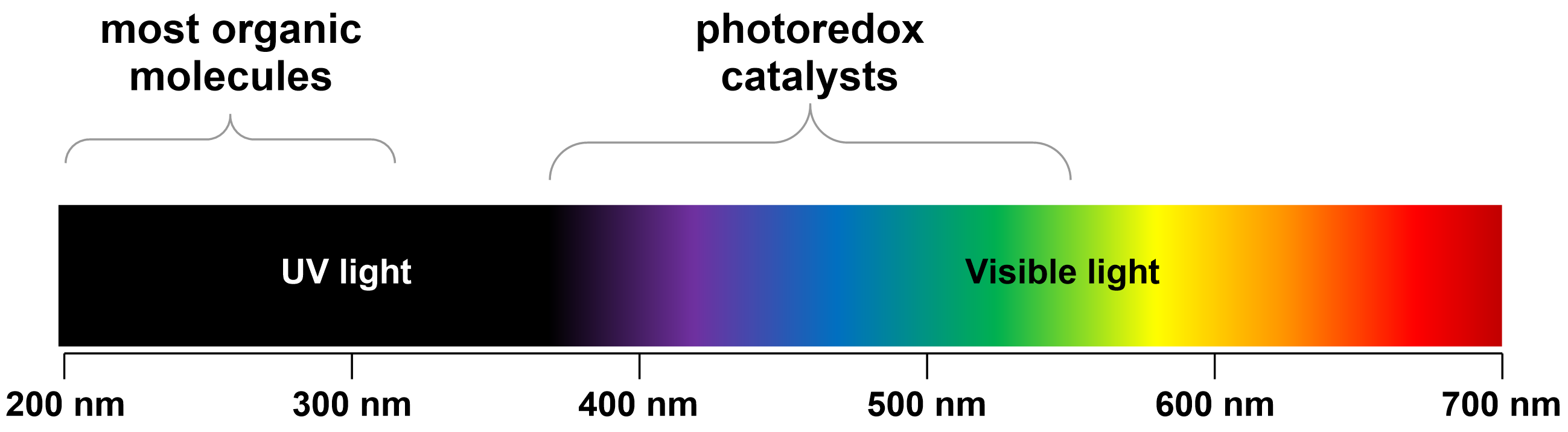
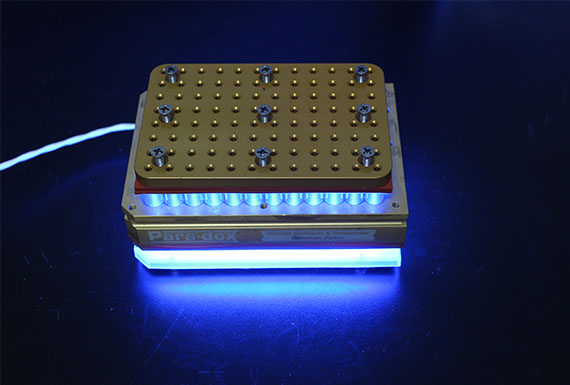
Photochemistry uses light energy of a specific wavelength as a “precision chisel,” replacing traditional thermal energy or chemical reagents to precisely break or reform chemical bonds, efficiently constructing the target molecule. While this might sound complex, photochemistry is not far from our daily lives. For example, colored clothes left to dry on a balcony slowly fade over time because the dye molecules undergo photochemical reactions under sunlight. Similarly, when a vintage film camera shutter clicks, the photosensitive material on the film absorbs light and undergoes a chemical change, capturing the image—a classic application of photochemistry. However, applying photochemistry in an industrial setting demands highly specialized equipment and expertise. It requires the light energy to penetrate the reaction system uniformly and stably, a feat nearly impossible in traditional reaction vessels.
To address this, the project team implemented a powerful combination of technologies.
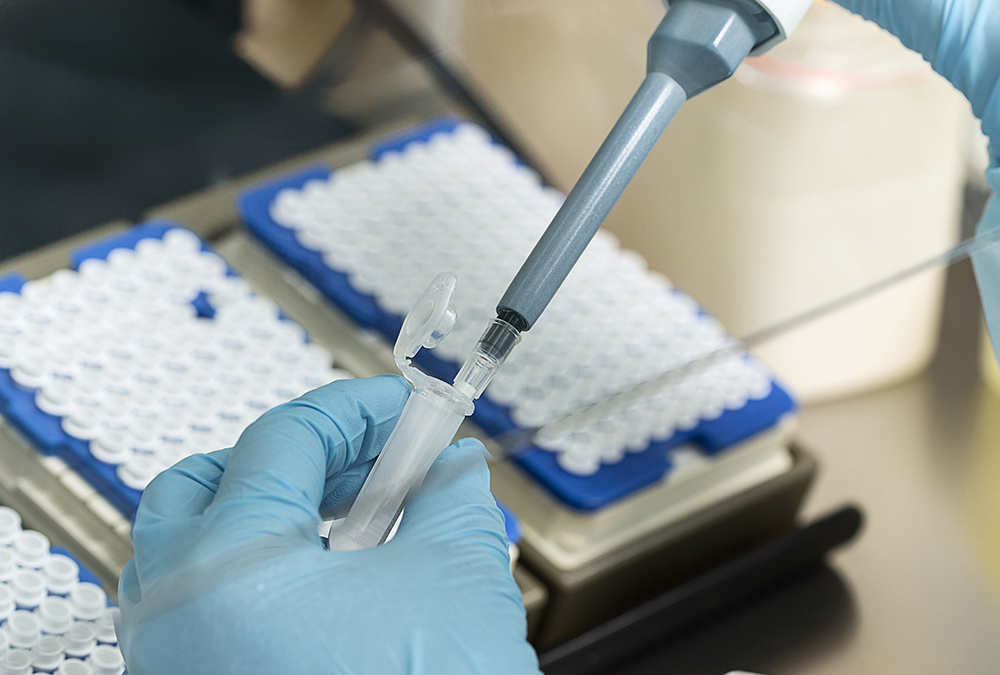
The first was High-Throughput Experimentation (HTE). If batch processing is like trying keys one by one in the dark, HTE is like activating hundreds of miniature “smart keys” simultaneously. It allows hundreds of reaction conditions—varying the light wavelength, trying a new catalyst, adjusting the concentration—to be tested in parallel within a very short time. What used to take weeks or even months of exploration could now be compressed into days, enabling the team to rapidly lock in a critical “formula.”
But finding the formula was only half the battle. The key was to make it run stably, efficiently, and in a scalable manner. This is where flow chemistry came into play.
Imagine, instead of having the raw materials confined in a reactor with uneven light exposure, they were continuously pumped like an intravenous drip through a narrow tube coiled into a transparent “light tunnel.” As the reactants flowed at a constant rate, they received uniform illumination from the outside of the tube wall, truly achieving “reaction on the go.”
Within this precisely engineered “light tunnel,” the light exposure was consistent and stable, and the reaction pathway was precisely controlled. The original complex process requiring five steps, multiple batch additions, and multiple separations and transfers was streamlined like an assembly line, completed in continuous flow in one step.
The results were remarkable: excellent product yield, exceptionally high cis-selectivity, and precise preparation of over 100 grams in just nine hours. This demonstrated that the process had successfully crossed the laboratory research stage, enabling the possibility to directly supply sufficient quantity of the drug candidate for subsequent toxicology studies and clinical trials, and laying a solid technical foundation for future large-scale production. This dual improvement in efficiency and quality shortened the project timeline significantly, from an estimated over four months to just ten weeks.
When the project team delivered the high-quality product to the client, the client’s project lead couldn’t hide their excitement. “The photochemical process had opened the door to route optimization for us, not only increasing yield but also making it possible to scale-up.”
Since then, this client has continued to collaborate with WuXi AppTec on multiple subsequent projects.

This case represents more than just a high-quality service delivery by WuXi AppTec’s photochemistry platform; it is a tangible microcosm of the company’s vision: “Every drug can be made, and every disease can be treated.” This successful enabling story not only highlights WuXi AppTec’s technical depth in the field of photochemistry but also stands as a solid testament to its comprehensive chemistry capabilities, serving as a quintessential example of its global CRDMO enabling platform in action amidst a wave of innovation.
Looking back over more than two decades, WuXi AppTec’s integrated, end-to-end CRDMO enabling platform has gone beyond a mere collection of technologies. The company has integrated and mastered a suite of innovative technologies—including photochemistry, electrochemistry, flow chemistry, enzymatic catalysis, and beyond—to better enable its global partners. Behind every synthesis of a molecule, what we see are scientists and clients full of anticipation, as well as patients waiting for treatment. It is this sense of respect and responsibility that drives the company to support thousands of customers worldwide in tackling R&D challenges, accelerating the journey of new drugs from molecule to clinical, breaking through bottlenecks in innovative therapies, and helping bring more new and better medicines to patients faster.

How can we help?
Get in touch with an expert.