WuXi Biologics
Offering End-to-End Solutions

Research Chemistry
Services
From Bottleneck to Breakthrough: How WuXi AppTec Translates Photochemistry into Real-World Drug Development Impact
From Bottleneck to Breakthrough: How WuXi AppTec Translates Photochemistry into Real-World Drug Development Impact
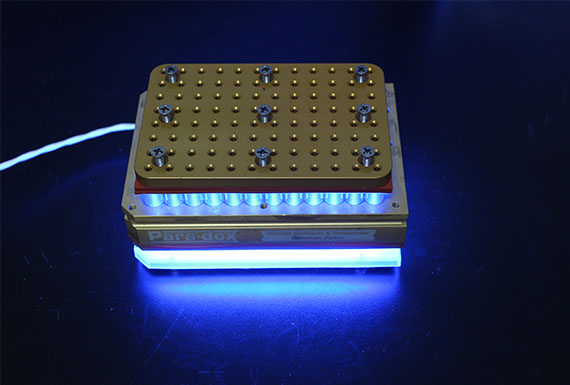
In one of WuXi AppTec’s laboratory buildings, a group of young researchers gathered around a photoreactor, making final adjustments. Outside, a lingering spring chill hung in the air; inside, a custom-built light source illuminated a reactor vessel sitting quietly.
At that moment, a client company was anxiously awaiting news. They needed to synthesize a key pharmaceutical intermediate but had hit a wall at a critical reaction step. Having exhausted all conventional methods without success, they turned to WuXi AppTec.
The wait finally paid off. The project team, leveraging a combination of photochemical reactions and other technologies, completed a synthesis at a scale exceeding 100 grams in just nine hours, laying the groundwork for subsequent research. Ultimately, the overall project timeline, initially estimated at over four months, was drastically shortened to just ten weeks.
When the high-quality product was delivered to the client, their project lead excitedly commented: “Your teams’ use of photochemistry including flow chemistry has really opened the doors to new optimization and has increased the yields on many projects as well as making many scale ups feasible.”
Today, the client continues to partner with WuXi AppTec on several follow-up projects.

This case serves as a microcosm of how WuXi AppTec, over more than two decades, has leveraged its comprehensive chemistry capabilities within its integrated CRDMO platform to enable R&D and manufacturing and earn customer trust.
Commenting on this, the head of the Photochemistry Technology Platform at WuXi AppTec’s Research Chemistry Services team noted: “The potential of photochemistry shows us that the boundaries of chemistry can still be pushed further. At WuXi AppTec, similar enabling stories unfold every day. Leveraging the company’s comprehensive and systematic chemical technologies and capabilities, we can more effectively support clients in overcoming R&D and manufacturing challenges, and ultimately help more customers to bring innovative therapies to patients faster.”
Future-Oriented Strategy: Riding the Wave of Photochemistry
In the early 2000s, synthetic chemists began exploring the potential of a mild yet powerful energy source: visible light.
In 2008, Professor David MacMillan’s team at Princeton University published a paper in Science demonstrating that visible light could gently pry open chemical bonds to generate previously difficult-to-handle radicals. Around the same time, research groups led by Professor Tehshik Yoon at the University of Wisconsin-Madison and Professor Corey Stephenson at the University of Michigan also discovered the potential of photocatalysis in various reaction types. These parallel studies collectively laid the essential groundwork for modern photoredox catalysis. Two years later, Professor MacMillan’s team combined photocatalysis with asymmetric catalysis, achieving precise three-dimensional control over product structure.
With that, synthetic chemists gained a new tool: light.
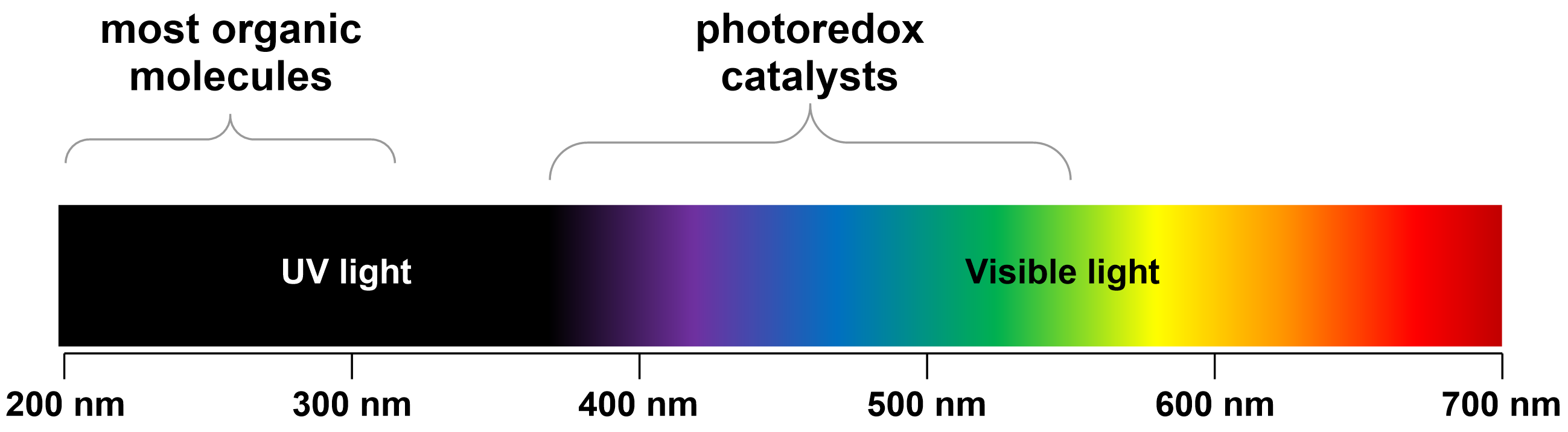
This key swiftly unlocked a new world. In 2014, Professor MacMillan collaborated with Professor Abigail Doyle, also at Princeton, to creatively merge photocatalysis and nickel catalysis, overcoming the challenge of efficiently constructing C(sp3)-C(sp2) bonds—a feat difficult with traditional methods. This breakthrough enabled carboxylic acids, which previously required multi-step transformations to be used, to directly build complex drug molecular frameworks, significantly shortening synthetic routes and quickly capturing the attention of the industry.
At that time, photoredox catalysis was flourishing in academia but remained a “test-tube magic trick” in industry—impressive to observe but difficult to control, let alone scale up for production.
As a global, integrated CRDMO platform, WuXi AppTec keenly recognized the potential of this innovative technology for drug discovery and began its strategic investments.
In 2016, after thorough preparation, WuXi AppTec formally established a photocatalysis condition screening platform, quickly assembled a core technical team and began to offer condition screening services internally.
The initial phase was challenging. A decade ago, the use of photocatalysis for molecular synthesis was still nascent across the pharmaceutical industry. “At that time, the market didn’t have the range of light wavelengths and photocatalytic reagents that are available today, and photoreactors were extremely rare. The first attempt to use a photocatalytic reaction to solve a synthetic route design was immensely challenging. But our team was courageous in trying,” the platform head recalled. “At the start, we lacked suitable industrial-grade photoreactors, let alone ready-made photocatalytic catalysts to screen. It was like starting from scratch.”
This young team remained determined. In the absence of commercially available photoreactors, they collaborated with manufacturing partners to custom-build their own. Even without a defined pathway, they examined catalysts, ligands, and reaction parameters through extensive experimental research.
Their perseverance paid off. In the platform’s first year, the team applied photocatalysis to a project involving C(sp²)-C(sp³) cross-coupling process, shortening the original four-step route to just two steps and increasing the overall yield by over eightfold. Furthermore, compared to traditional synthetic routes, the photochemical approach avoided the use of sensitive reagents and eliminated a reduction step that posed safety risks.
As expertise in technology, methods, and experience grew, the team became increasingly adept at applying the photocatalytic platform. In its second year, a client required the introduction of alkyl groups onto heterocyclic halides for a compound project. However, the alkyl carboxylic acid substrates were relatively unreactive and displayed resistance to decarboxylation. The RCS team applied a photochemical C(sp³)-C(sp²) decarboxylative coupling strategy. After screening over 30 nickel ligands, they successfully identified a photocatalytic method. The result: the original seven-step synthetic route was condensed into a single step, and the project timeline, initially projected to be at least two weeks, was shortened to just four days.
“This example illustrated the potential of reaction design and screening in the early stage of photocatalytic technology development.” The platform head stated.
In 2019, when Professor MacMillan was invited to give a lecture at WuXi AppTec, he was impressed by the company’s progress in photochemical applications—in less than four years, WuXi AppTec had successfully carried out more than 10,000 photochemical reactions.
To date, WuXi AppTec’s photochemistry platform has successfully validated and implemented dozens of photochemical reaction types. Now, routine reactions such as C(sp²)-C(sp³) cross-coupling and C(sp³)-C(sp²) decarboxylative coupling are mature service modules within WuXi AppTec’s photochemistry platform.
Overcoming the Scale-Up Challenge: Bridging the Gap from Grams to Kilograms
A well-known saying in the field of photochemical process development goes: “Getting a photocatalytic reaction to work perfectly in a flask is an art; making it run safely and economically at the kilogram scale in a plant is an entirely different engineering discipline.”

As photocatalysis became operable in high-throughput modes, it rapidly evolved from a specialized technique into a conventional tool for synthetic chemists. However, the challenge of scaling up remained unresolved. This issue represents not only a necessary step for the industrialization of photochemistry but also a significant engineering hurdle.
Following industry trends, WuXi AppTec’s photochemistry team, after focusing on reaction type development, parameter exploration, and gram-scale synthesis for compound libraries, turned its attention to tackling this industry-wide pain point.
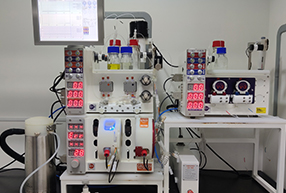
Leveraging WuXi AppTec’s comprehensive capabilities and extensive experience in chemistry, the photochemistry team collaborated with the flow chemistry team to develop methods for scaling up flow photochemistry. They continuously explored solutions by deeply integrating high-throughput experimentation (HTE) with flow chemistry.
“HTE can test hundreds of reaction conditions in a very short time, quickly identifying the optimal formulation; flow chemistry, through continuous processing, enables stable, batch production of the target compound,” the platform head explained, drawing an analogy. “It’s like developing a new recipe at home to find the best combination, and then using a central kitchen to validate and solidify the process at a pilot scale from hundreds of grams to kilograms, ultimately delivering a complete, scalable solution to the client.”
Leveraging the deep synergy of HTE and flow chemistry, WuXi AppTec’s chemistry platform widens the scope of scalable flow photochemical processes year by year. It supports clients in addressing scale-up needs from hundreds of grams to over a kilogram, covering the entire workflow from condition screening and parameter impact studies to process stabilization and subsequent flow scale-up.
At present, the company’s photochemistry team has been working in conjunction with the flow chemistry team to develop dozens of flow photochemical reaction types. Additionally, they established a variety of scale-up methods. These include challenging deoxygenative coupling reactions requiring meticulous steps, as well as gas-generating cyclopropanations and hydrazine synthesis involving hazardous reagents.
“For certain types of molecules, photocatalysis offers a synthetic route that may be more efficient or, in some cases, not readily achievable with conventional methods,” the platform head remarked, expressing strong confidence in the future potential of photocatalytic synthesis for pharmaceutical molecules.
From the initial “beam of light” in that early laboratory to today’s integrated photocatalysis platform covering dozens of reaction types, WuXi AppTec’s photocatalytic capabilities have traversed a path from zero to one, from laboratory research to industrial application.
Today, photocatalysis is increasingly applied to the synthesis of complex molecules with greater maturity.
Consider targeted protein degraders (TPDs), a recent focus in drug development. These molecules often feature complex and sensitive structures, posing significant challenges for chemical synthesis and scale-up. Photocatalysis, with its mild, rapid, and heating-free characteristics, is offering new pathways for synthesizing such complex molecules. “Currently, our photochemistry platform has become one of the key technological approaches for synthesizing complex molecules like TPDs. We can now systematically execute a variety of critical photocatalytic reactions for TPDs,” remarked the platform head.
“As photocatalysis technology continues to evolve, with the diversification of available reaction types, our team has become skilled in determining its effective applications,” further elaborated the platform head. “Photocatalysis allows for feasible disconnection strategies in retrosynthetic analysis and provides the opportunity for a broader array of bond cleavage modes. This technique not only enhances the conciseness and effectiveness of synthesis but also aids in executing transformations that could be challenging or unfeasible using traditional methods. These include decarboxylative coupling, deboronative coupling, NHP ester coupling, the incorporation of fluorinated functional groups, and the recent incorporation of bicyclo[1.1.1]pentane (BCP) rings followed by functionalization. In these transformations, photocatalysis serves as a synthetic method that yields more effective outcomes and achieves a higher success rate.”
Ongoing Enhancement: Enabling Innovative Futures
The evolution of WuXi AppTec’s photochemistry platform capabilities reflect the company’s comprehensive chemical expertise and serves as a microcosm of its global CRDMO enabling platform amid ongoing waves of innovation.
Over the past two decades, WuXi AppTec has established an integrated, end-to-end CRDMO platform encompassing a wide range of chemistry technologies and capabilities, including photochemistry, electrochemistry, flow chemistry, and enzymatic catalysis. These continuously refined and comprehensive chemical capabilities provide the essential support for high-quality, efficient delivery, earning the long-term trust of numerous clients worldwide.
According to data disclosed at 2025 WuXi AppTec Investor Day, its RCS team has collaborated with over 980 clients for more than five years, with 280 clients for over a decade, and with more than ten clients for over twenty years. These figures stand as a testament to enduring client trust and reflect the fulfillment of WuXi AppTec’s mission to “enable global innovation.”
From the first light switched on in that initial laboratory to today’s integrated platform encompassing dozens of reaction types with various innovative chemical technologies, the evolution of WuXi AppTec’s photochemistry platform mirrors not only the expansion of technological frontiers but also the company’s more than two decades commitment to “following the science, following the customer”—transforming seemingly minor reactions into reliable, trustworthy solutions.

How can we help?
Get in touch with an expert.