WuXi Biologics
Offering End-to-End Solutions


Research Chemistry
Services
The Next Frontier in Oncology Discovery: Matching the Right Target, Modality, and Patient
For many years, early oncology programs often began with a familiar question: Can we drug this target? Today, that question has become more nuanced. Once a promising target or pathway is identified, discovery teams also need to determine which modality is most appropriate, which patient population is most likely to benefit, which assay system can generate reliable data, and how early decisions may influence downstream development risk.
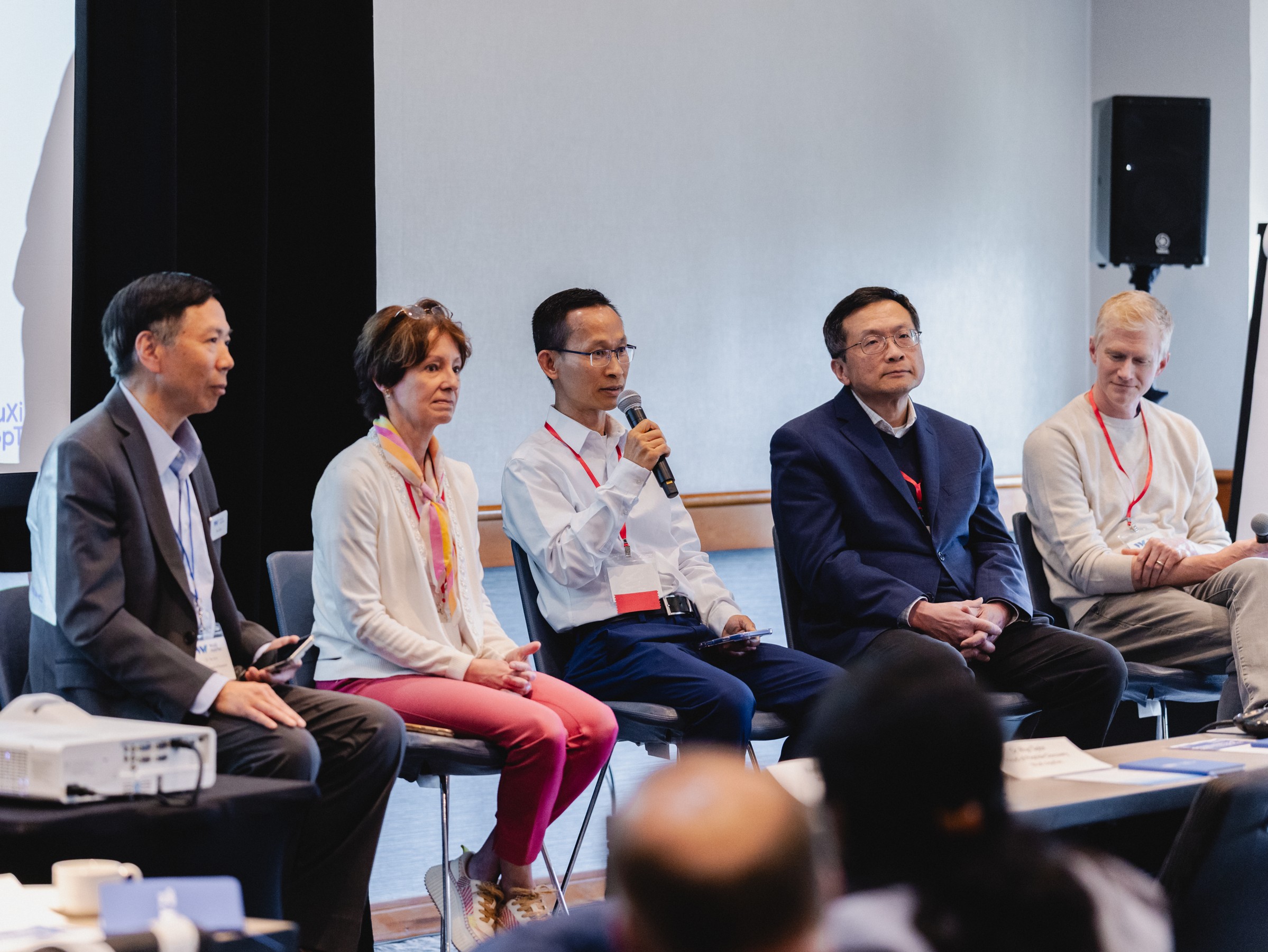
At the WuXi AppTec Spring Science Forum, drug discovery leaders discussed how rapidly the oncology field is evolving. Their conversation reflected a field with more therapeutic possibilities, but also more difficult choices. Several themes stood out from the discussion: the diversification of therapeutic modalities, the need to understand cancer as a biological system, and the growing importance of integrated expertise in helping innovators translate target hypotheses into high-quality drug candidates.
Together, these themes point to a central idea: the next generation of cancer medicines will depend not only on access to more modalities, but also on the quality of decisions teams make when matching modality to biology, assay strategy, and patient selection.

A more complex discovery landscape is reshaping oncology innovation
More modalities are changing the meaning of druggability
Across the discussion, modality diversification emerged as a defining feature of today’s oncology discovery landscape. Cancer drug discovery is no longer dominated by conventional small molecules and monoclonal antibodies. Researchers are now exploring a much broader toolbox, including antibody-drug conjugates, molecular glues, Proteolysis Targeting Chimeras, peptides, macrocycles, multispecific antibodies, radioligands, and other emerging therapeutic formats.
This expansion is changing how teams think about difficult targets. Druggability is becoming less fixed and more dependent on whether the right modality can be matched to the underlying biology.
Among these emerging approaches, induced proximity has drawn growing attention as a design principle for oncology drug discovery. These therapies are based on a powerful idea: instead of simply blocking or activating a target, a drug molecule can bring biological components together to trigger a desired therapeutic effect. This concept is already visible in molecular glues and Proteolysis Targeting Chimeras.
In May 2026, the FDA approved Veppanu (vepdegestrant), a heterobifunctional protein degrader developed by Arvinas and Pfizer, for adults with ER-positive, HER2-negative, ESR1-mutated advanced or metastatic breast cancer following disease progression after at least one line of endocrine therapy. The approval marked the first FDA approval of a Proteolysis-Targeting Chimera therapy and provided an important clinical validation point for targeted protein degradation.
From there, the induced-proximity field continues to expand into related approaches such as Lysosome Targeting Chimeras, Deubiquitinase Targeting Chimeras, Ribonuclease Targeting Chimeras, and other proximity-based strategies.
Rather than representing a single modality, induced proximity is better understood as a broader drug-design principle. By bringing biological components together, these approaches can drive different therapeutic outcomes, including protein degradation, protein stabilization, altered trafficking, functional inhibition, or immune-mediated killing. For oncology, this opens new possibilities.
Targets once considered difficult because they lacked obvious binding pockets or enzymatic activity may become more tractable when approached through proximity-based mechanisms.
At the same time, this abundance of options requires discipline. With so many therapeutic formats available, early programs can easily lose focus. Modality selection should be guided by target biology, disease context, mechanism of action, patient population, and the practical path to development.
The risk of “mission creep” is rising as the toolbox expands
One of the more practical insights from the panel was that modality abundance can create a new kind of discovery risk: mission creep. When a program is focused on an inhibitor, someone may ask whether the target should also be addressed using a degrader. When a team is pursuing a degrader, another question may follow: why not a molecular glue, or another emerging format?
This reflects the excitement of the field, but it also creates pressure for early programs, especially when resources are limited. With so many therapeutic formats available, teams can lose focus if they continue expanding the scope before the original biological hypothesis has been fully tested.
The panelists’ point was not that teams should avoid exploring new modalities. Rather, modality selection needs discipline. A program should be guided by target biology, disease context, mechanism of action, patient population, and the practical path to development. The useful question is not how many approaches can be tested, but which approach is most biologically justified, experimentally measurable, and developmentally practical.
This is where a system-level view of cancer becomes important. Cancer cannot be understood through a single target alone. Tumor cells survive through complex and adaptive systems involving signaling pathways, genetic dependencies, metabolism, immune evasion, and tumor microenvironment interactions. The deeper the understanding of the cancer system, the better teams can determine whether the disease should be approached through inhibition, degradation, immune engagement, synthetic lethality, payload delivery, or combination therapy.
New technologies are making this deeper interrogation possible. Multi-omics, biomarker discovery, translational models, organoids, and patient-derived systems are helping researchers ask more informed questions earlier in discovery. Advanced screening technologies are also expanding the range of molecules that can be discovered. DELs, peptide libraries, mRNA display, fragment-based screening, structure-based design, and computational chemistry, can also help generate starting points for difficult targets. Panelists pointed out that all these tools can be used to answer the question: which intervention strategy best fits the biology?
Precision medicine now depends on matching biology, modality, and combination
Precision medicine continues to shape oncology discovery and development. Yet precision medicine today is broader than matching one mutation with one drug. It increasingly involves understanding tumor evolution, resistance mechanisms, and adaptive treatment strategies.
Combination therapy is becoming a natural extension of this thinking. As tumors evolve, a single intervention may not be enough. Different modalities may be combined to address parallel pathways, overcome resistance, or improve the depth and durability of response.
In this context, modality diversification gives precision medicine more room to evolve. A broader therapeutic toolbox creates more opportunities to design rational combinations for specific patient populations. It also raises the importance of choosing the right intervention strategy early, because each modality may bring different strengths, limitations, and combination potential.
For discovery teams, this means precision medicine is no longer only a clinical development concept. It begins earlier, when teams decide which biology to pursue, which modality to apply, which assay system to trust, and which patient context the program is ultimately designed to serve.
Key challenges facing smaller biotech companies in early discovery
Smaller biotech companies need sharper early focus
For emerging biotech companies, the expanding oncology toolbox is both exciting and challenging. More modalities mean more possible paths forward, but also more strategic decisions. Teams need to determine which modality best fits the target, how much biology is needed before committing to a program, and which data are essential before advancing from hit finding to lead optimization or candidate selection.
These decisions are especially important in a funding environment where resources are limited. Small companies often cannot afford to explore every modality or run every possible assay. They need to make focused decisions early while preserving enough flexibility to respond to new data.
Assays are not just experiments; they are decision systems
A second challenge discussed by the panel was assay development and optimization. For complex targets and emerging modalities, assay systems are rarely plug-and-play. Published conditions may provide a starting point, but they may not work reliably for a specific target, compound class, or mechanism.
This matters because poor assay design can distort the entire discovery process. If assay conditions are not appropriate, teams may struggle to generate meaningful structure-activity relationships (SARs). For small companies, the challenge is even sharper. They may not have the budget to run every assay or the internal expertise to optimize every condition. They need to identify which assays are truly decision-enabling and which experimental systems can generate reliable, reproducible, and interpretable data.
Knowledge gaps can slow the path from hit to candidate
Small biotech teams often have deep expertise in a specific area, such as disease biology, medicinal chemistry, or platform technology. But early drug discovery requires many specialized capabilities beyond the initial idea. Gaps may emerge in DMPK, formulation, in vivo pharmacology, developability, translational biomarkers, or candidate selection.
Formulation is a good example. A formulation that works for one compound may not work for another, even within the same program. Literature may provide limited guidance, and external consultants may not always have enough program-specific expertise. Without access to experienced, integrated support, these issues can delay progress or force teams to make decisions with incomplete information.
This is why early discovery increasingly requires connected expertise. A promising molecule is evaluated not only for potency, but also for selectivity, exposure, pharmacokinetics, safety margins, formulation feasibility, and development potential. Considering these dimensions earlier can support more informed candidate selection.
How integrated platforms can help innovators navigate complexity
Connecting biology, chemistry, and technology selection
In a more complex discovery landscape, innovators need more than isolated services. They benefit from partners that can connect biological insight with practical discovery execution. This begins with matching the target and mechanism to the most appropriate hit-finding and optimization strategies.
WuXi AppTec’s integrated CRDMO platform can support innovators across this decision-making process by bringing together discovery biology, medicinal chemistry, screening technologies, and assay development capabilities. This breadth can help teams evaluate different intervention strategies and identify a practical path forward.
Building fit-for-purpose assays
Assay strategy is a key area where an experienced partner can add value. For novel targets and complex modalities, assay systems are often more effective when customized to the biology of the program. This may include biochemical assays, biophysical assays, cell-based assays, functional readouts, biomarker assays, and translational models.
WuXi AppTec can help innovators design fit-for-purpose screening strategies, optimize assay conditions, validate controls, and generate data that support SAR and decision-making. This is particularly valuable when teams must choose between multiple possible assays under budget constraints. The objective is not to generate the maximum amount of data, but to generate the right data at the right time.
Bridging discovery and development readiness
The value of an integrated CRDMO model becomes especially clear as programs move from early hits toward candidate nomination. At this stage, potency and mechanism increasingly need to be considered alongside DMPK, exposure, formulation, safety, manufacturability, and IND-enabling requirements.
By connecting chemistry, biology, DMPK, formulation, and development planning, WuXi AppTec’s integrated platform can identify potential liabilities before they become late-stage obstacles. This can be especially valuable for smaller companies that may not have all specialized functions in-house.
In early oncology discovery, speed matters only when paired with quality. An integrated approach can help accelerate the design-make-test-analyze cycle while maintaining scientific rigor, enabling innovators to move toward candidate molecules with greater confidence.
Toward a more integrated future for oncology discovery
The future of cancer drug discovery will not be defined by one modality, one technology, or one type of target. It will be shaped by the ability to integrate disease biology, target context, therapeutic modality, combination potential, and development feasibility.
For innovators, this creates both opportunity and responsibility. More targets may become addressable, more mechanisms may be explored, and more patient populations may benefit from precisely designed therapies. At the same time, early decisions need to be grounded in reliable data and a clear understanding of biology.
As oncology discovery becomes more system-driven and modality-rich, integrated partners will play an increasingly important role. By connecting scientific expertise with broad discovery and development capabilities, WuXi AppTec can help innovators navigate complexity, reduce technical uncertainty, and advance promising cancer drug candidates toward the patients who need them.