WuXi Biologics
Offering End-to-End Solutions


Research Chemistry
Services
From Discovery to IND: A Biology-First Approach to New Modalities
Across complex therapeutic areas, innovators are applying an expanding range of new modalities, from antibody-drug conjugates (ADCs) and bispecific antibodies to peptides, oligonucleotides, and other advanced formats. Yet as the therapeutic toolbox expands, one principle remains central: modality should follow biology. A new modality creates value only when it is matched to a disease-relevant mechanism, supported by translational evidence, and developed with a clear path toward clinical testing. For innovators, a practical question emerges: before advancing a new modality into the clinic, how can teams build confidence that the biology is real, relevant, and translatable?
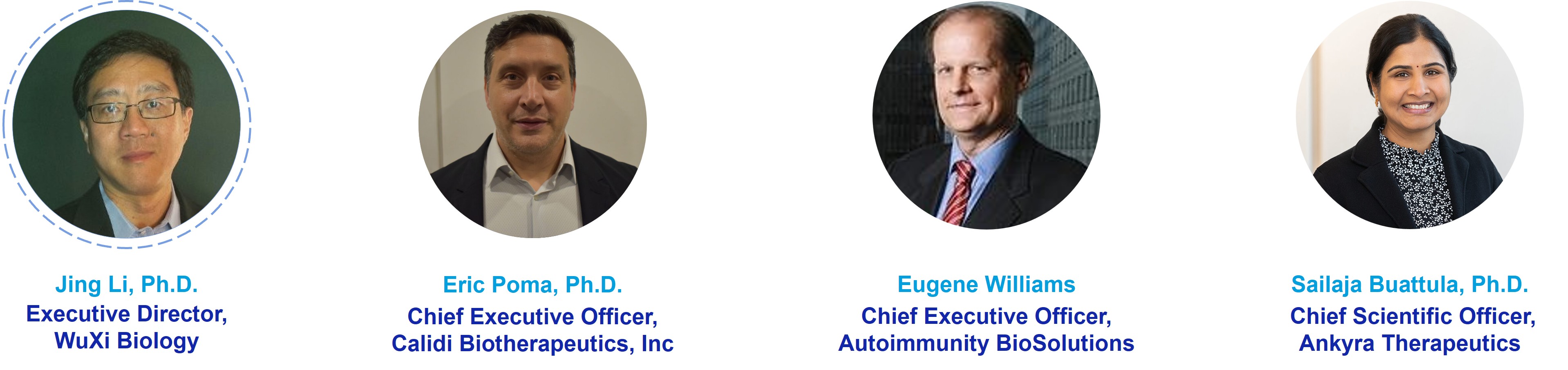
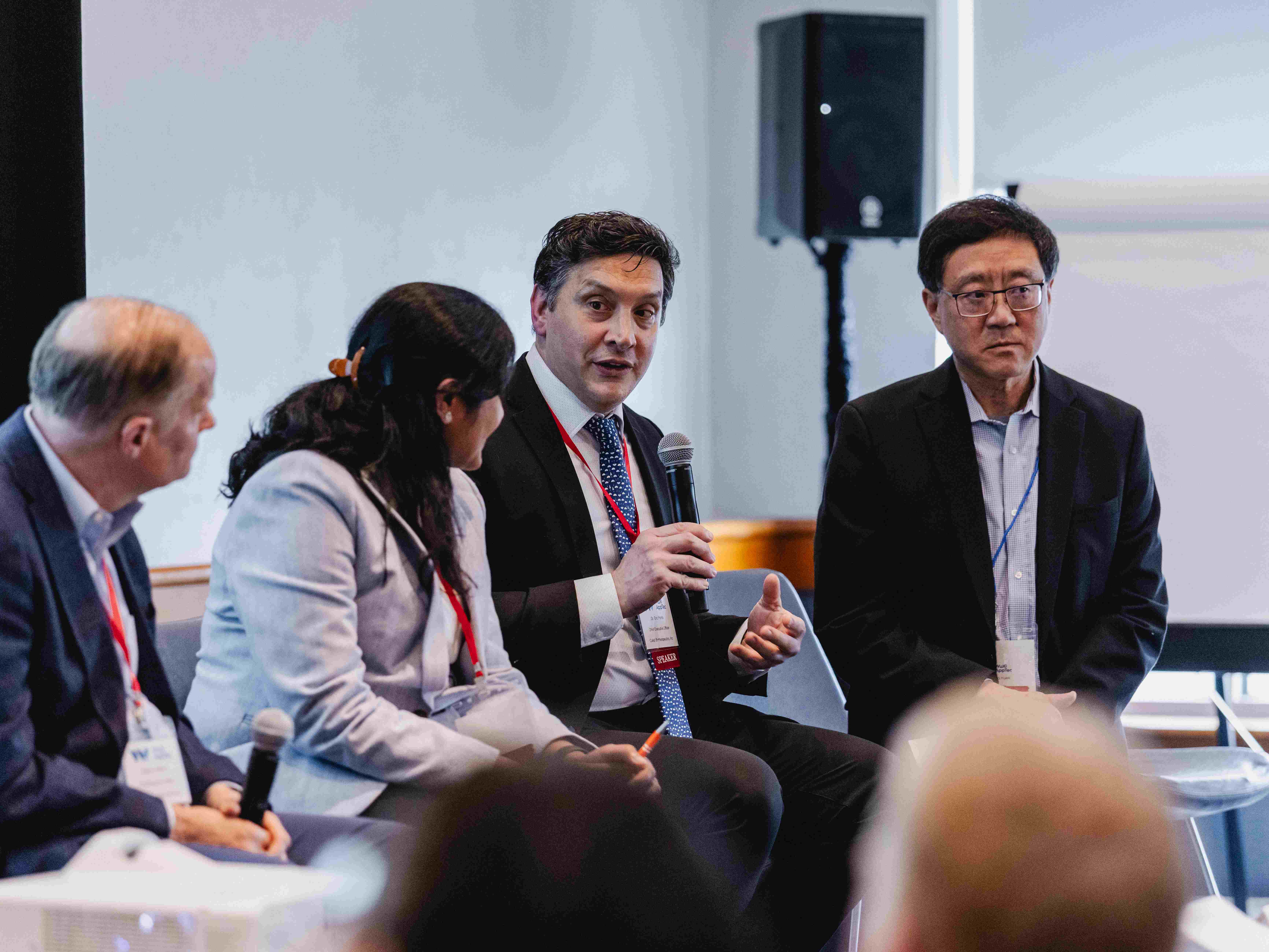
At the WuXi AppTec Spring Science Forum, several clear ideas emerged from the discussion among industry leaders: the need to validate biology with fit-for-purpose models, the value of relevant evidence before clinical entry, and the role of different modalities not only as therapeutic strategies but also as tools to test and strengthen biological hypotheses.
Validating biology from discovery to preclinical development
1. Use relevant evidence to strengthen translational confidence
A biology-first approach begins with the question the team is trying to answer. In early discovery, the increasing maturity of model systems gives discovery teams more ways to interrogate biology before entering the clinic. Syngeneic models can help evaluate immune-mediated mechanisms. Organoids and similar systems can provide more human-relevant context. Primary immune-cell assays and explant models can help examine cellular interactions, tissue-specific responses, and pharmacodynamic signals.
No nonclinical model can fully predict what will happen in the first clinical trial. Therefore, relevant evidence is becoming an important part of preclinical strategy. Sample studies, registries, and outcome datasets can help teams understand whether the biology observed in discovery is present in the intended patient population.
The panel discussion emphasized the value of these translational evidence in therapeutic development. One speaker described how existing databases, registries, and prospective sample studies can help characterize a defined patient population, refine inclusion criteria, identify biomarkers, and define early indicators of response.
For many new modality programs, this evidence can be critical. A bispecific antibody or T-cell engager may perform well in models with high antigen expression, but clinical performance may depend on the actual density and distribution of the target protein in tumors. An ADC program may need to understand not only gene expression but also protein abundance, internalization, tumor heterogeneity, and normal tissue expression.
2. Use modalities as validation tools as well as therapeutic strategies
New modalities are often discussed as therapeutic solutions, but they can also serve as biological validation tools. In a biology-first framework, different modalities can help test whether a target or pathway is causally relevant, how it should be modulated, and whether the same biological hypothesis holds across more than one intervention strategy.
One example discussed by the panel involved a patient subpopulation in which an overexpressed protein appears to be associated with more severe disease and reduced response to standard therapy. In this setting, the biology suggested two potential ways to intervene. An antibody could be used to target the overexpressed protein directly, while an antisense oligonucleotide (ASO) could address the biology upstream by modulating protein expression. By exploring both approaches in relevant models, the team could ask the same biological question from two different therapeutic angles: does reducing or neutralizing this disease-associated protein change the biology in a meaningful way?
This type of convergent evidence can strengthen confidence in a program. If an antibody and an ASO produce consistent biological effects across relevant models, the program gains a stronger “reason to believe” for internal decision-makers, partners, and investors.
Used thoughtfully, multiple modalities can therefore do more than expand therapeutic options. They can help validate biology, compare mechanisms, and support a more informed path from discovery to IND.
Key translational challenges in early discovery
1. Clinically-relevant biology is difficult to access
A recurring challenge in preclinical translation is the limited availability of clinically-relevant evidence. Discovery teams may be able to study tumor infiltration, gene expression, immune activation, or pharmacodynamic effects in model systems. In clinical trials, however, direct access to the target tissue is often limited. Matched pre- and post-treatment biopsies can be difficult to obtain, and peripheral signals may not fully capture what is happening in the tumor or diseased tissue.
This creates a gap between what teams can measure in discovery and what they need to understand before and during early clinical development.
The panelists also highlighted the need for better access to well-characterized, well-preserved samples with associated phenotypic and biological data. Such resources can help teams evaluate target expression, patient heterogeneity, disease stage, resistance patterns, and biomarker relevance. Together, these insights can help teams build a stronger translational rationale and support a more informed transition from discovery to IND-enabling development.
2. New modalities require tailored IND-enabling strategies
New modalities can open therapeutic possibilities, but they also create distinct translational challenges. An intratumoral therapy may require a different preclinical strategy than a systemic antibody. A viral therapy may need evidence of tissue delivery, payload expression, immune interaction, and pharmacodynamic activity. A bispecific antibody may require careful evaluation of antigen density, immune activation, cytokine risk, and tumor selectivity.
These questions influence the IND-enabling package. Teams need to show that the drug reaches the intended tissue, engages the intended mechanism, produces measurable pharmacodynamic effects, and has a safety profile consistent with the proposed clinical strategy. They also need to consider which readouts can be incorporated into the first clinical protocol.
For emerging companies, this can be challenging. They may have strong biology or platform expertise, but limited internal capacity in translational pharmacology, drug metabolism and pharmacokinetics (DMPK), toxicology, formulation, or regulatory strategy. Moving from discovery to IND requires these disciplines to be coordinated early.
How integrated platforms can help innovators move from discovery to IND
1. Providing fit-for-purpose models to interrogate biology
In a biology-first program, the model strategy should be built around the therapeutic question. WuXi AppTec can help innovators select and apply fit-for-purpose systems across in vitro, ex vivo, and in vivo studies to generate a more complete view of the biology before IND submission.
These capabilities may include biochemical and cell-based assays, organoids, translational biomarker assays, pharmacodynamic readouts, and disease-relevant pharmacology models. By combining different systems, teams can test mechanism, evaluate response, identify biomarkers, and better understand where a modality may have clinical relevance.
2. Supporting modality selection and validation across therapeutic formats
As modalities diversify, innovators benefit from partners with experience across therapeutic formats. WuXi AppTec’s platform can support discovery and preclinical programs involving small molecules, peptides, ADC-related payloads and linkers, oligonucleotides, protein degradation strategies, and other emerging modalities, depending on the needs of the program.
This breadth can help teams evaluate more than one way to modulate a biological pathway. In some programs, multiple modalities may be used to validate the same biology. In others, cross-modality comparison may help identify which approach has the best balance of potency, selectivity, exposure, delivery, safety, and development feasibility.
3. Bridging discovery, preclinical development, and IND readiness
A strong biological hypothesis still needs to become an IND-ready package. This requires a close connection between discovery biology, pharmacology, DMPK, formulation, safety assessment, CMC considerations, and regulatory planning.
WuXi AppTec’s integrated CRDMO platform can help connect these disciplines so that early biological insights are translated into a coherent preclinical strategy. Pharmacodynamic markers identified in discovery can be incorporated into in vivo studies and early clinical planning. Formulation and exposure considerations can be addressed alongside pharmacology. Safety assessment can be designed with awareness of the modality, route of administration, tissue distribution, and proposed clinical use.
This integrated approach can help reduce the friction that often appears when a program moves from discovery into IND-enabling development. It can also help emerging companies anticipate downstream questions, generate decision-enabling data more efficiently, and build a stronger rationale for clinical entry.
Building confidence before the clinic
As new modalities continue to expand the possibilities of drug discovery, the path from discovery to IND will depend on more than technological innovation. It will depend on the ability to validate biology, select models that are fit for purpose, generate clinically relevant evidence, and build a translational strategy that connects discovery findings with clinical execution.
For innovators, especially emerging biotech companies, this biology-first approach can help focus resources on the questions that matter most. For partners such as WuXi AppTec, it creates an opportunity to support the full journey from hypothesis to IND by providing model systems, cross-modality experience, translational assays, and integrated CRDMO capabilities.
In the era of new modalities, successful programs may not be those that begin with the newest technology. They may be the ones that begin with clear biology, ask the right questions early, and build the evidence needed to bring promising therapies closer to patients.